By ZUBAIR CHOUDHRY, RPA, APA, President & CEO of RPA Canada
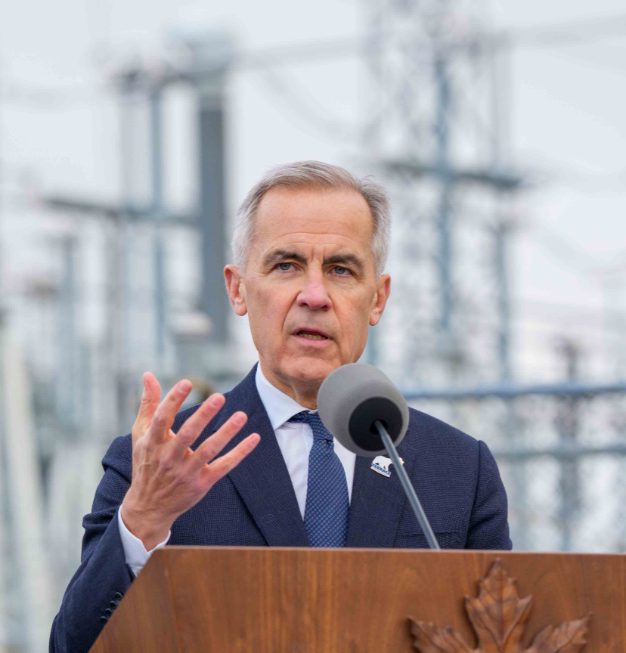
Prime Minister Mark Carney’s recent visit to China and the trade framework he has described as a success has triggered strong reactions across Canada. The sharpest criticism has come from Ontario, where Premier Doug Ford has warned that the agreement threatens auto-sector jobs and was reached without sufficient provincial consultation.
These concerns deserve serious consideration. At the same time, it is essential to assess this deal within the much larger strategic context Canada is operating in today one defined by global realignment, intensifying trade negotiations with the United States, and the need to protect Canadian sovereignty.
A Pragmatic Deal in an Unforgiving Global Economy
The Canada–China trade framework allows up to 49,000 Chinese electric vehicles (EVs into Canada annually at a 6.1 per cent tariff, in exchange for China easing or removing punitive duties on key Canadian exports such as canola, seafood, and vegetables.
For Western and Atlantic Canada, this is not theoretical it is immediate economic relief. Market access to China sustains farmers, processors, exporters, and rural communities that had been severely impacted by tariffs. Canada is not a single-industry country, and national trade policy must reflect that reality.
This agreement is not about choosing one province over another. It is about stabilizing the national economy while positioning Canada for far larger negotiations ahead.
EV Concerns Are Real-But So Is Transition
Premier Ford has argued that while the EV quota represents roughly three per cent of the overall auto market, it could amount to a much higher share of EV sales. Ontario’s concern is understandable. The auto sector is foundational to the province’s economy and identity.
However, competition in EVs is unavoidable. Global supply chains are shifting, technology is evolving, and protection alone will not preserve competitiveness. A controlled, tariff-based entry provides time time for Canadian manufacturers to adapt, innovate, and move further up the value chain in advanced manufacturing, battery technology, software, logistics, compliance, and professional services.
As a professional accountant, I see how trade expansion generates employment well beyond factory floors across finance, advisory, technology, sustainability reporting, and SME services. These are resilient, future-focused jobs that matter to Ontario and Canada alike.
The Bigger Negotiation: The United States
Crucially, the China file cannot be separated from the looming negotiations with the United States over the renewal and re-balancing of the US-Mexico-Canada free trade framework. Prime Minister Carney knows he will be negotiating with Donald Trump, one of the most aggressive dealmakers in modern politics.
In such negotiations, leverage matters. Options matter. Entering talks economically cornered is a weakness. Diversifying trade relationships particularly reopening channels with China strengthens Canada’s hand. It signals resilience and independence.
Seasoned negotiators never arrive with one card. Prime Minister Carney is ensuring Canada holds several.
Sovereignty Is the Real Red Line
Canada today faces a challenge larger than tariffs: the protection of its sovereignty. Rhetoric circulating in parts of U.S. political discourse about Canada as a potential “51st state” strikes at the core of Canadian independence. Canadians will never accept such an outcome and Prime Minister Carney understands this clearly.
Strength abroad protects stability at home. A country that demonstrates global partnerships and economic independence commands respect. President Trump has consistently shown that he negotiates hardest but most directly with leaders who stand firm for their nations. That is precisely what Canadians expect Prime Minister Carney to do: stand up for Canada’s sovereignty, freedom, and values.
Ontario Matters-and Both Leaders Know It
Ontario is Canada’s largest province and holds the greatest number of seats in Parliament. No Prime Minister can ignore that reality. Premier Ford is therefore doing what Ontarians elected him to do: speak forcefully for Ontario workers and industries.
Equally, Prime Minister Carney knows that safeguarding Ontario jobs is not optional it is essential. Any trade strategy that fails Ontario fails Canada. These negotiations, whether with China, the United States, or future partners, must ultimately protect employment, investment, and supply chains in Ontario.
This is not a battle between Carney and Ford. It is two leaders playing different, legitimate roles within the same national interest.
Credit Where It Is Due-and What Comes Next
Prime Minister Carney is working hard, across multiple global fronts, at a moment of extraordinary complexity. From the Middle East to Europe, Indonesia to China and soon to India, the largest economy in South Asia where some of the world’s largest long-term trade opportunities exist his strategy reflects urgency, realism, and foresight. No serious trade strategy can ignore India’s scale, growth, and demand, particularly in sectors where Canada excels.
Canadians should give the Prime Minister credit for this effort and rally behind him. Governing today requires balance, resilience, and difficult choices. To remain in power and secure a stable majority government something Canada needs right now Prime Minister Carney must deliver results across regions and sectors. He understands that reality.
The China agreement should be seen not as an endpoint, but as part of a broader positioning strategy: strengthening Canada’s hand, protecting sovereignty, diversifying trade, and preparing for the defining negotiations ahead.
Canada’s success will not come from division. It will come from unity, strength, and strategic leadership. On that measure, Canada must stand together.
